Before you book
Can you actually drive one? Check this first
Street karts run on public roads, so Japanese law treats you as a driver, not a passenger. Every operator checks your documents at the counter and turns people away who arrive without them — with no refund. Which document you need depends entirely on where your licence was issued.
-
Most countries — bring a 1949 Geneva Convention IDP
Japan recognises the International Driving Permit issued under the 1949 Geneva Convention. It is a grey paper booklet, not a card and not an app. It must be issued by the same country that issued your domestic licence, it is generally valid for one year, and you must carry it together with your original domestic licence and your passport.
Australia, the UK, Ireland, the USA, Canada, New Zealand, most of the EU and many others sit here.
-
Six jurisdictions — you need a JAF translation instead
Licences issued in Switzerland, Germany, France, Belgium, Monaco or Taiwan do not use an IDP for Japan. Instead you need an official Japanese translation of your licence from the Japan Automobile Federation. JAF charges ¥6,600 including tax as of 1 July 2026 and quotes an average of two to three business days for these six jurisdictions.
An IDP will not be accepted from these six — bringing the wrong document is the single most common reason drivers are turned away.
-
Some countries cannot drive in Japan at all
If your licence was issued somewhere that is not party to the 1949 Geneva Convention and is not one of the six translation jurisdictions, you cannot legally drive in Japan on that licence — including a kart. Operators list China, Indonesia, Mexico, Qatar and Saudi Arabia among the examples.
You can still book as a passenger on other Tokyo experiences, but not drive a kart. Check before you pay.
This is general guidance based on the Japan Automobile Federation's published information and the operators' own booking conditions, checked in August 2026. Rules change; confirm with your operator and with JAF before you travel.
Ways to book a Tokyo kart tour
Find a Tokyo karting slot for your trip
Each Tokyo kart tour below is booked directly on GetYourGuide, so the slots you see are real and the total converts to your currency the moment you check out.
How the hour runs
How the hour runs
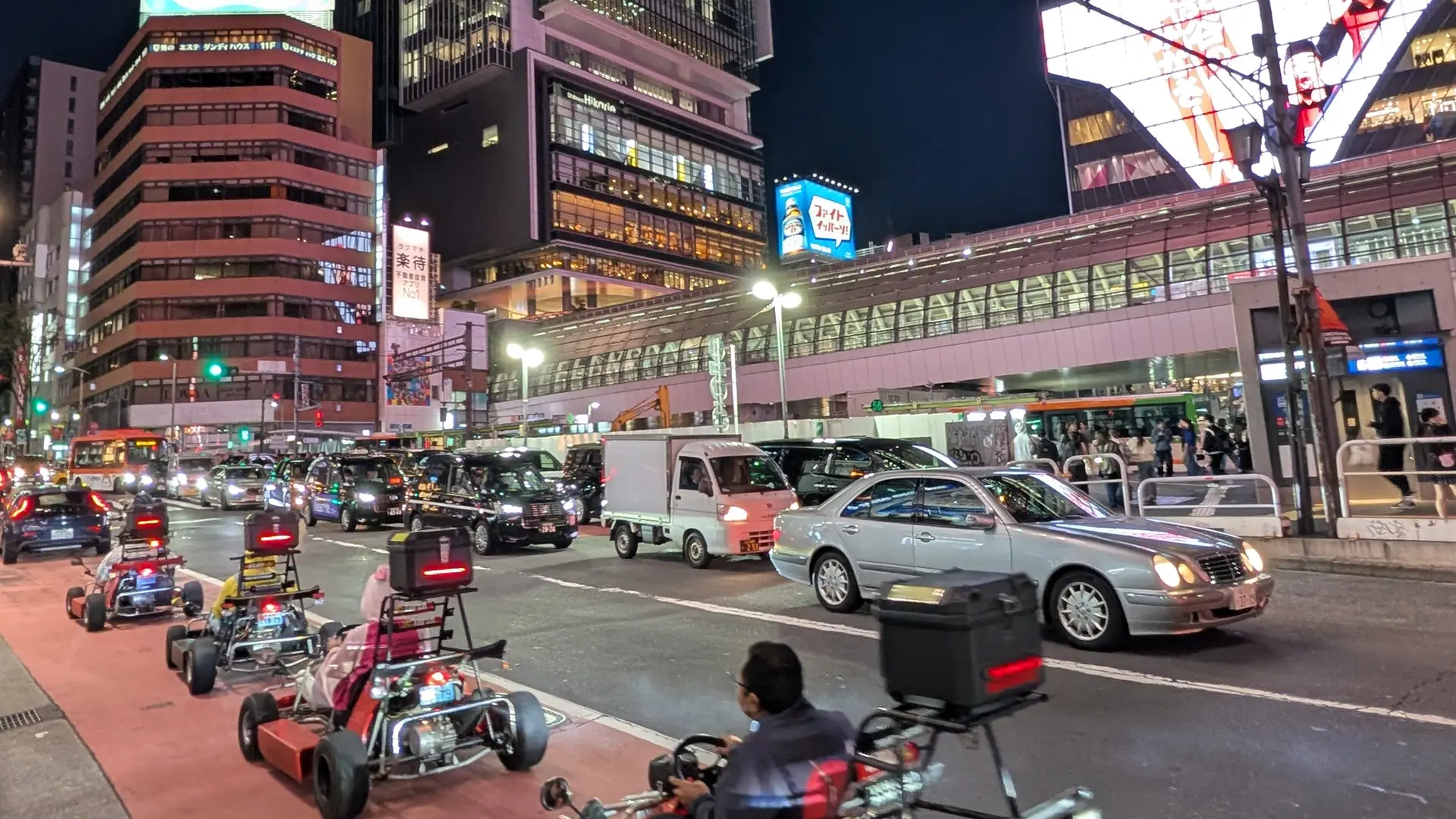
A Shibuya run is short and tightly managed. You are on live public roads the entire time, in a single-file line behind a guide, obeying the same signals as every car around you.
- 00:00
Documents and briefing
You arrive early — most operators ask for 20 to 30 minutes before the slot. Staff check your domestic licence, your passport and your IDP or JAF translation. Then comes the safety briefing: controls, hand signals, the route, and what to do at lights.
- 00:15
Kart fit and costume
You are matched to a kart and adjust the seat. Costume rental is included with most operators — the range is generic film and superhero styling rather than video-game characters, following the Japanese court rulings described below.
- 00:25
Out into traffic
You pull out into Tokyo traffic behind the guide. The karts are low, open and loud enough to be noticed; you keep formation, indicate, and stop at every light like any other vehicle on the road.
- 00:40
Shibuya Crossing
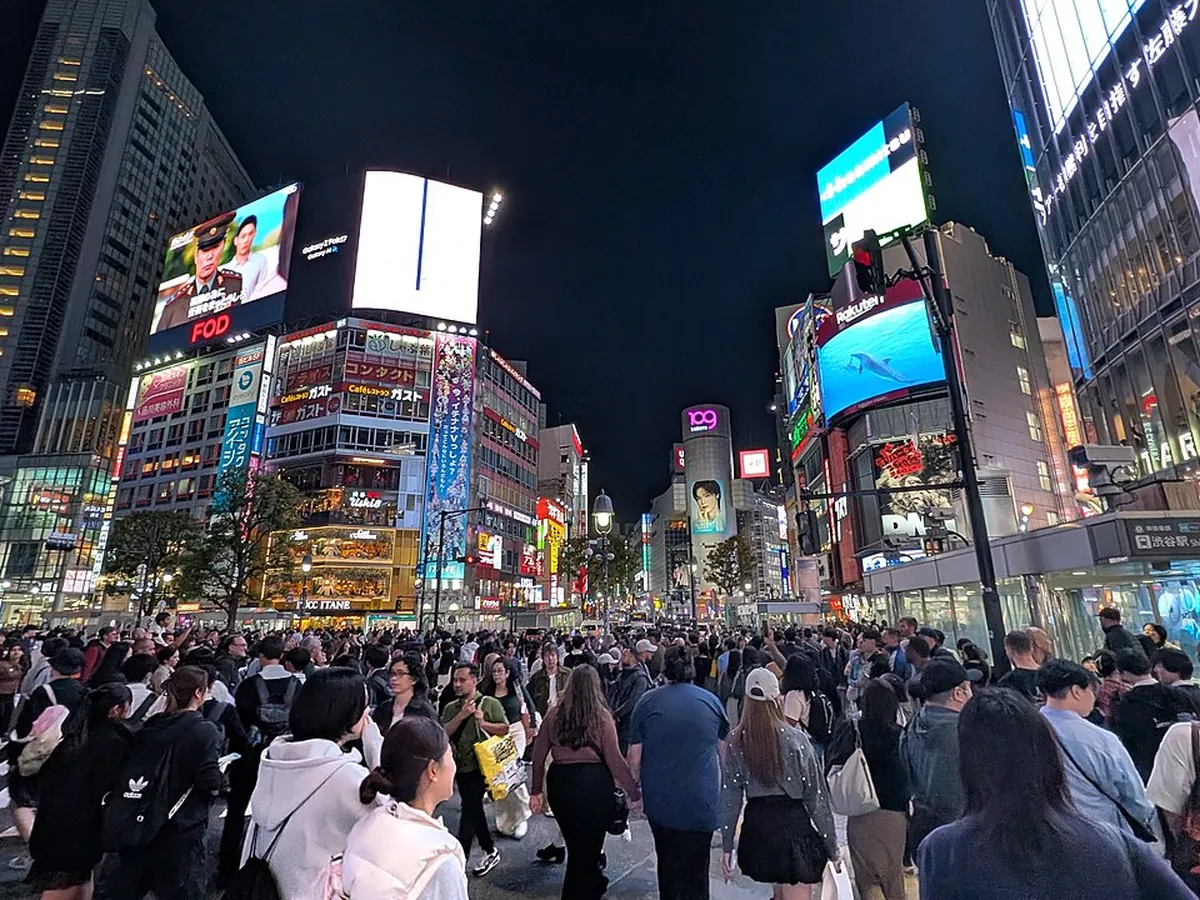
The centrepiece: crossing one of the world's busiest pedestrian intersections at street level, usually more than once and from different approaches, with pedestrians filming from every corner.
- 00:55
Harajuku and Omotesando
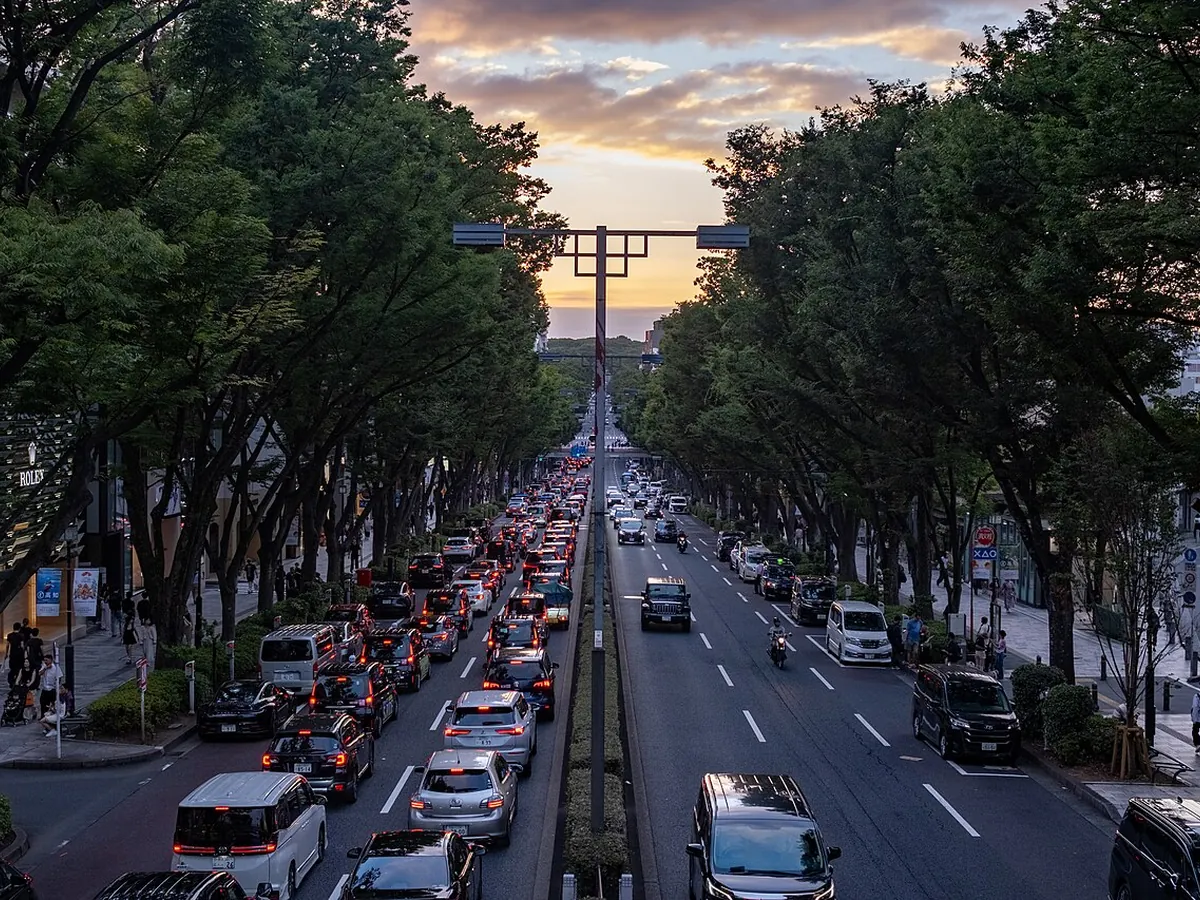
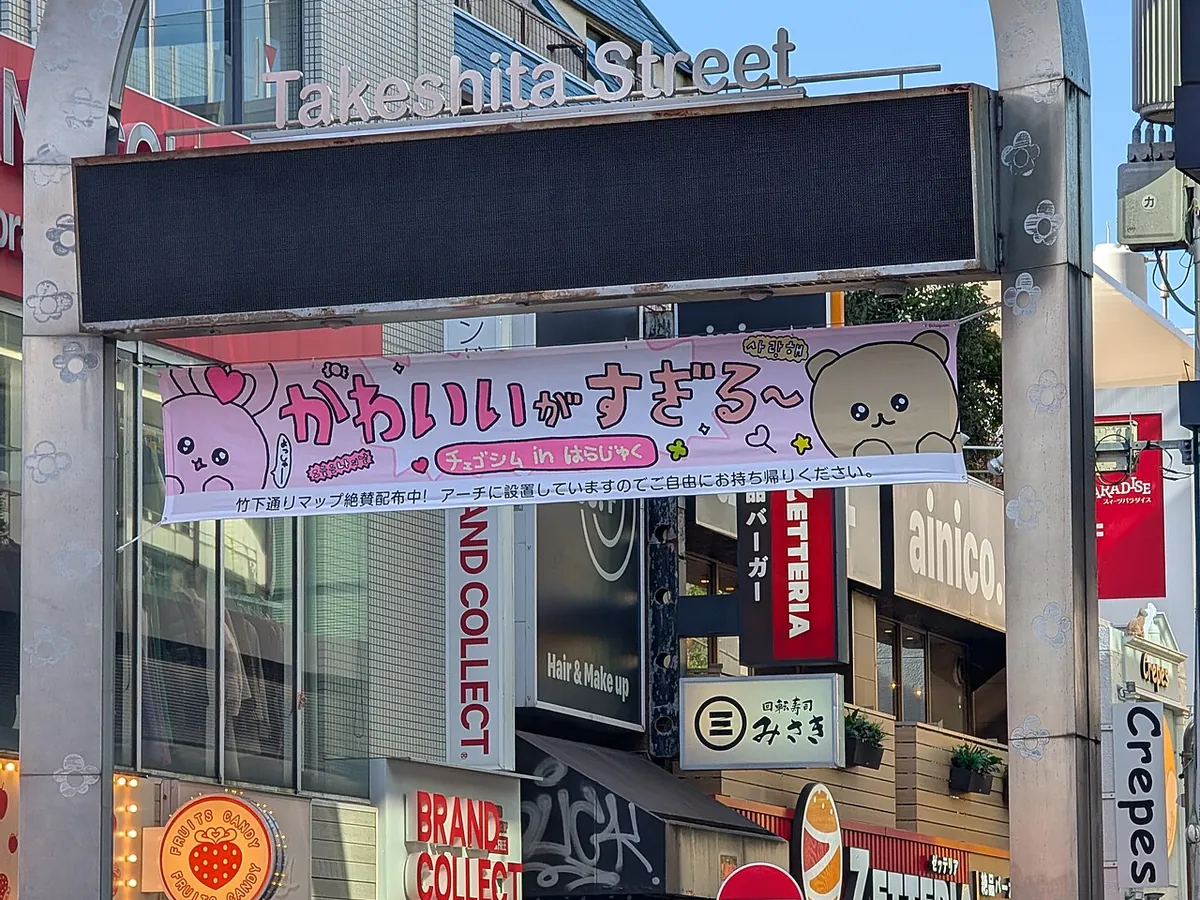
The route swings out to Tokyo's fashion district — the broad tree-lined run down Omotesando and the narrower streets around Harajuku, where the pace slows and the guide stops for photographs.
- 01:00
Back to the garage and photos
You return the kart and costume. Guides typically shoot photographs throughout and hand over the files afterwards — check the individual listing, because how and when you receive them varies by operator.
Book with confidence
- Cancellation terms upfront Convoy operators set their own cancellation window — read the exact hours on the tour page before you commit
- Your own currency The final price is shown before checkout, with no hidden booking fee
- Live availability Slots and dates come straight from GetYourGuide, not a static list
- Licence rules explained We tell you what document you need before you spend anything
What's included
Tokyo street-kart tours on GetYourGuide, compared — ratings and from-prices checked 12 August 2026
| Tour | Route and length | Rating | From (A$) |
|---|---|---|---|
| 1Street Kart — Shibuya | Shibuya Crossing, Harajuku, Omotesando · 1 hr | 4.9 (1,833) | 148 |
| 2Premium — Tokyo Tower and Shibuya | Tokyo Tower, Shibuya Crossing, Harajuku | 4.7 (643) | 161 |
| 3Official Japan Kart — Shibuya / Shinjuku | Longer west Tokyo landmark run | 4.8 (192) | 188 |
| 4Shibuya Kart — premium | Shibuya loop · 45 min | 4.6 (858) | 90 |
| 5Shibuya Crossing with photos | Shibuya Crossing, photo-led · 1 hr | 4.8 (337) | 113 |
| 6Shibuya Crossing × Tokyo Tower | Two-landmark run · 1.5 hr | 4.9 (197) | 99 |
| 7Shibuya and Shinjuku streets | Shinjuku to Shibuya · 1 hr | 4.5 (465) | 80 |
| 8Akiba Kart — Shinjuku to Shibuya | Shinjuku start, Shibuya Scramble · 1 hr | 4.8 (313) | 82 |
| 9Guided sightseeing — short run | Shibuya · 30 min, cheapest entry | 4.3 (292) | 64 |
Why book through this guide
What a Tokyo kart tour is actually like
It is a road trip, not a racetrack
The single biggest misunderstanding is that this is motorsport. It is not. There is no circuit, no racing and no overtaking — you drive a small street-legal vehicle in ordinary Tokyo traffic, in a line, at the speed of the cars around you. The thrill comes from the position: you sit very low, in the open, at the centre of a city that is looking directly at you.
Why the karts are legal at all
These vehicles are registered for road use in Japan, which is why a driving licence is mandatory and why the document checks are strict. It also means every ordinary road rule applies to you: signals, lane discipline, stopping distances and Japan's zero-tolerance approach to alcohol. Guides ride in front partly to navigate and partly to keep the group inside those rules.
The costumes, and the court case that changed them
Costume rental is part of the appeal and is included with most operators. What you will not find is video-game characters. Nintendo sued the operator then trading as MariCar under Japan's Unfair Competition Prevention Act; the company was ordered to stop using the characters and to pay damages, raised to ¥50 million on appeal, and the outcome was upheld by Japan's Supreme Court. The operator rebranded as Street Kart. Today's costume racks are generic superhero and film styling instead.
Choosing between the operators
Several garages run near-identical Shibuya loops at different prices, and the differences are real but narrow: how long you drive, whether Tokyo Tower is included, how many times you cross the Scramble, and whether photographs are handed over as files afterwards. The comparison table above lays out what is actually different. Rating depth is worth weighing — a tour with well over a thousand reviews tells you more than one with a dozen.
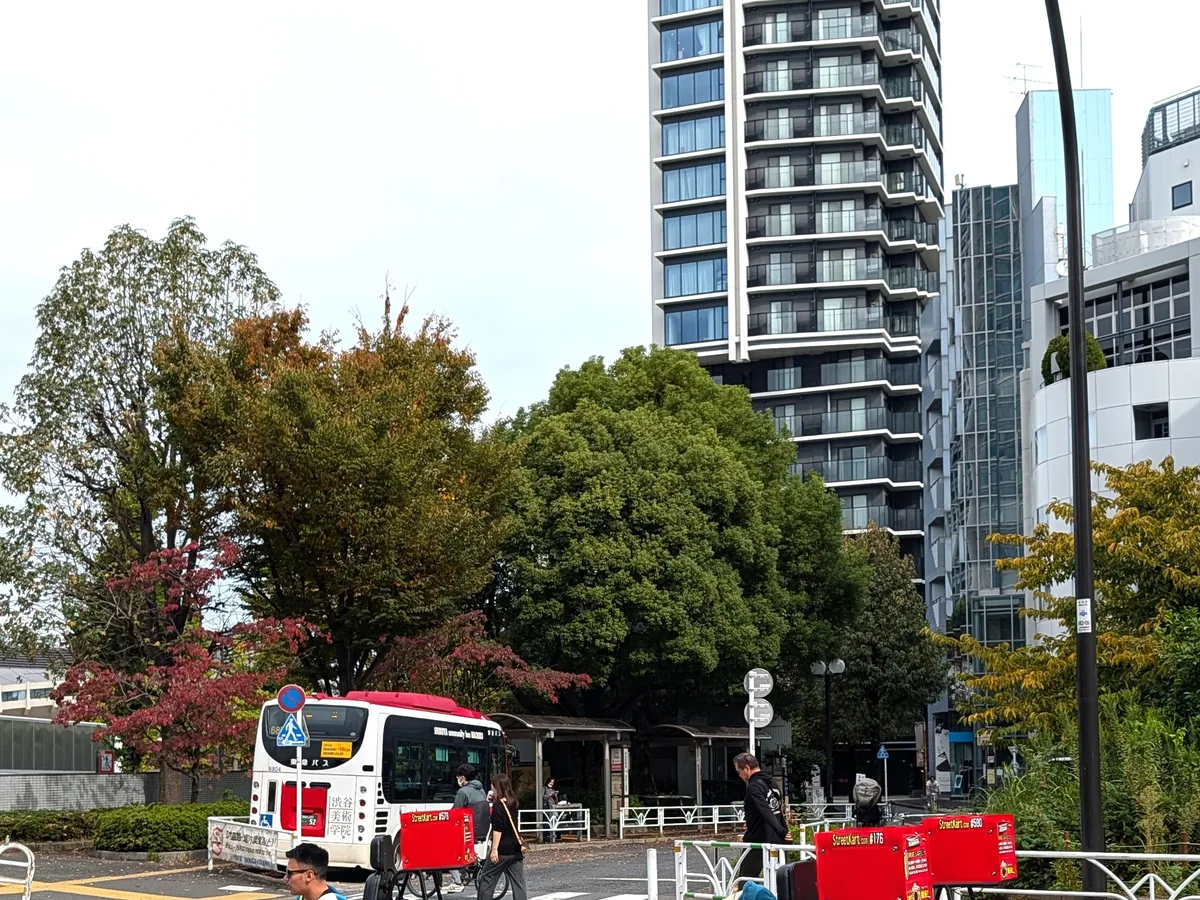
Shibuya at street level
The setting the route is built around — the Scramble, the neon, and the streets the karts run through.
At the garage
At the garage
Tokyo's kart garages are small workshop units tucked under railway arches and in side streets, usually a short walk from a major station. What happens at the counter matters more than the address.
- Arrive early, not on time
- Document checks and the safety briefing happen before your slot starts, not during it. Operators commonly ask for 20 to 30 minutes' margin, and a late arrival can lose the slot outright.
- Three documents, all physical
- Your original domestic licence, your passport, and your IDP booklet or JAF translation. Photographs and digital copies on a phone are not accepted — the checks are done on the physical documents.
- What you cannot bring
- Operators prohibit phone use while driving, and turn away drivers in slippers or high-heeled shoes. Alcohol is an absolute bar — Japan enforces a zero-tolerance drink-driving standard, and it applies to you on a kart exactly as it applies to a car.
- Size and age limits
- You need to be old enough to hold a full licence, and the karts have physical limits. One Shibuya listing states 150–185 cm and under 100 kg; the exact figures vary by operator and kart, so check the listing you are booking.
Planning your drive
Planning your drive
- Start the paperwork weeks ahead
- This is the step that catches people out. An IDP must be issued in the country that issued your licence, before you travel — you cannot obtain a valid one online while you are already in Japan. For the six JAF-translation jurisdictions, budget for the fee and the two-to-three-day processing on top of postage. Treat it as a pre-flight task, not a holiday errand.
- Best time of day
- Evening runs put you into Shibuya's neon at its best and are the most photogenic, which is why they book out first. Daytime slots are easier to get, calmer in traffic and better if you are a nervous driver. Both cross the Scramble.
- Weather
- Karts are open, and operators cancel in heavy rain — typically offering a reschedule, or a refund where no alternative date works. Tokyo's rainy season runs roughly June to mid-July, so build slack into your dates if you are travelling then.
- Getting to the garage
- Shibuya and Shinjuku garages sit within walking distance of their main stations, but they are small units on side streets and in railway arches rather than shopfronts. Save the operator's map pin when your confirmation arrives, and allow extra time to find the door.
Go deeper
Which document do you actually need to drive in Japan?
Japan does not accept every International Driving Permit, and six jurisdictions cannot use one at all. Here is what applies to you, and how long it takes to get.
Read the guide → THE BASICSWhat Is Tokyo Street Go-Karting, Exactly?
Not a racetrack, not a theme-park ride — a street-legal kart, a public road, and a guide leading the way. Here is what actually happens on a Tokyo kart tour.
Read the guide → BEFORE YOU BOOKThe Full Requirements Checklist for a Tokyo Kart Tour
Licence paperwork gets the headlines, but operators turn people away over shoes, size, timing and alcohol just as often. Here's everything else to check first.
Read the guide → THE ROUTESTokyo Street-Kart Routes Compared: Shibuya to Tokyo Bay
Different garages run genuinely different drives — a neon crossing, a bay bridge, an anime district. Here's what each route actually shows you, and how to pick.
Read the guide → THE MARIO KART LAWSUITWhy You Can't Dress as Mario: The MariCar Lawsuit
The operator used to be called MariCar and dressed drivers as Mario and Luigi. Nintendo sued, won at every level, and the industry's costumes changed for good.
Read the guide → SAFETY & WHAT TO EXPECTIs Tokyo Street Karting Safe? What to Actually Expect
You share the road with real buses and taxis, sitting low and easy to overlook. A clear-eyed look at the actual risk, how it's managed, and what to expect.
Read the guide →FAQ
Tokyo go-karting questions
Do I need an International Driving Permit to drive a go-kart in Tokyo?
For most nationalities, yes. Street karts run on public roads, so Japan treats you as a driver. You need an International Driving Permit issued under the 1949 Geneva Convention — the paper booklet form — carried together with your original domestic licence and your passport. The exceptions are licences issued in Switzerland, Germany, France, Belgium, Monaco and Taiwan, which need a JAF translation instead.
Is a card or digital International Driving Permit accepted?
No. Japan recognises the 1949 Geneva Convention booklet. Card-format permits, digital permits and app-based permits are not accepted, and neither are permits issued under the 1968 Vienna Convention. Operators check the physical document at the counter, and drivers who arrive with the wrong format are turned away without a refund.
My licence is German, French, Swiss, Belgian, Monegasque or Taiwanese — what do I need?
A Japanese translation of your licence issued by the Japan Automobile Federation, not an IDP. JAF charges ¥6,600 including consumption tax as of 1 July 2026, and quotes an average of two to three business days' processing for these six jurisdictions. You carry the translation together with your original licence.
Can I get the permit after I arrive in Japan?
Generally no, and this is the most expensive mistake to make. An International Driving Permit has to be issued by the authority that issued your domestic licence, which in practice means arranging it at home before you fly. A JAF translation can be arranged from within Japan, but the processing time still applies. Sort the paperwork before you travel.
Do I need a Japanese driving licence?
No — and it is worth saying clearly, because at least one listing's marketing text suggests otherwise while its own fine print asks for an International Driving Permit. A valid foreign licence plus the correct Japanese document is what operators actually check. If a listing's description and its requirements section disagree, the requirements section is the one that governs at the counter.
What if my country is not covered by the 1949 Geneva Convention?
Then you cannot legally drive in Japan on that licence, and the operators will not let you drive a kart. Operators cite China, Indonesia, Mexico, Qatar and Saudi Arabia among the examples. Check your own country's status before you book anything, because this is not something the operator can waive.
Is it dangerous?
You are in open traffic in a low vehicle, so it is not risk-free, but it is heavily managed. Groups are capped at around six drivers, a trained guide leads the whole route, there is a safety briefing before you set off, and phone use while driving is prohibited. Japan's drink-driving law is zero-tolerance and applies to you exactly as it would in a car.
Are there height, weight or age limits?
Yes, and they vary by operator and kart. You need to be old enough to hold a full driving licence in your own country. One Shibuya listing specifies 150 to 185 cm and under 100 kg. Check the specific listing you are booking rather than assuming, and contact the operator if you are near a limit.
What happens if it rains?
The karts are open and operators cancel in heavy rain. The usual remedy is a free reschedule to another date, with a refund if no alternative date works for you. Light rain often still runs. Cancellation terms differ between operators — some allow free cancellation up to 24 hours ahead, others require seven days — so read the policy on the listing before you pay.
Can I dress as a video-game character?
No. Costume rental is included with most operators, but the range is generic superhero and film styling. Nintendo brought a successful action under Japan's Unfair Competition Prevention Act against the operator then trading as MariCar, which was ordered to stop using its characters and to pay damages raised to ¥50 million on appeal, upheld by the Supreme Court. The company rebranded as Street Kart, and the industry moved to non-branded costumes.